Tech
Pentachronism: Meaning, Origins, and Philosophical Significance

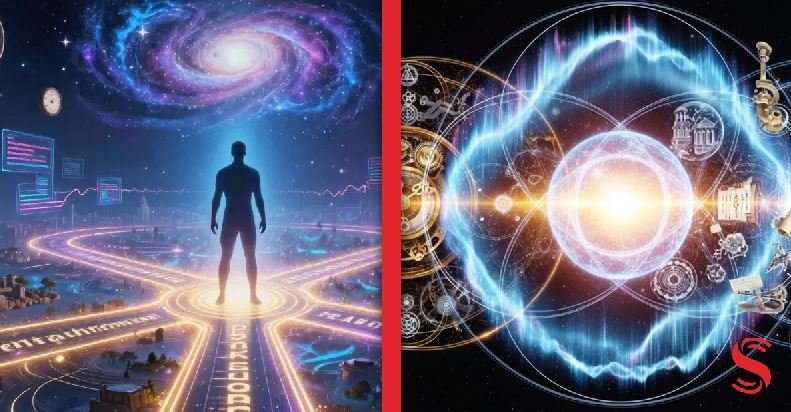
In the fascinating world of philosophy and human thought, few concepts capture the imagination quite like the nature of time. Across centuries, scholars, spiritual thinkers, and cultural observers have attempted to understand how time shapes existence, memory, identity, and destiny. Among the lesser-known yet intriguing concepts connected to this discussion is Pentachronis, a term associated with the idea of a five-fold understanding of time. While not widely recognized in mainstream philosophical discourse, Pentachronis has attracted interest among those who explore alternative frameworks of temporal understanding. Its appeal lies in its attempt to view time not as a single linear flow but as a multi-layered reality that influences human experience in different ways.
Quick Bio Table
| Detail | Information |
| Concept Name | Pentachronis |
| Related Theory | Pentachronism |
| Main Theme | Nature of Time |
| Category | Philosophy |
| Cultural Relevance | Symbolic and Interpretive |
| Historical Roots | Theoretical and Conceptual |
| Core Principle | Five-Fold Time Framework |
| Academic Interest | Emerging Discussion |
| Modern Usage | Philosophical Exploration |
| Key Focus | Human Experience of Time |
| Related Fields | Culture, History, Spirituality |
| Significance | Alternative Time Understanding |
The Meaning Behind Pentachronism
Pentachronism is often described as a way of understanding time through five interconnected dimensions or perspectives. Rather than treating time as a simple progression from past to present and future, the concept suggests that multiple layers of temporal experience coexist. These layers influence how individuals perceive reality and interpret events.
The idea resonates with philosophical traditions that challenge purely linear views of existence. Human beings rarely experience time as a straightforward sequence. Memories, expectations, emotions, and cultural narratives often blend together, creating a more complex relationship with time.
In this context, Pentachronis becomes an important symbolic term. It represents an effort to explain how different temporal dimensions interact within human consciousness. This broader perspective encourages deeper reflection on daily experiences.
Although interpretations vary, the central idea remains consistent: time is richer and more complex than it appears on the surface.
Historical Roots of the Concept
The origins of Pentachronism are difficult to trace with certainty. Like many philosophical ideas, it appears to draw inspiration from multiple traditions rather than a single historical source. Ancient cultures often viewed time as cyclical, sacred, or multidimensional.
Greek philosophers, Eastern thinkers, and indigenous traditions all developed unique understandings of temporal reality. Their perspectives challenged simplistic notions of chronological progression. These influences continue to inspire modern discussions about time.
The concept associated with Pentachronis reflects this broader historical tendency. Human civilizations have long recognized that past experiences, present actions, and future possibilities are deeply interconnected.
As philosophical inquiry evolved, scholars sought new frameworks to explain these relationships. Pentachronism can be viewed as part of this ongoing intellectual journey.
The Five-Fold Nature of Time
At the heart of Pentachronism lies the idea that time may be understood through five distinct yet connected dimensions. These dimensions are often interpreted symbolically rather than scientifically. Together they create a richer framework for understanding existence.
The first dimension generally relates to memory and the influence of the past. The second focuses on present awareness and immediate experience. The third considers future possibilities and anticipation.
Additional dimensions may represent spiritual time and collective cultural time. These broader layers acknowledge that individuals exist within larger social and historical contexts.
Through Pentachronis, these dimensions are viewed not as separate realities but as interconnected aspects of a unified temporal experience.
Philosophical Interpretations
Philosophers have long debated whether time is objective or subjective. Some argue that time exists independently of human perception, while others believe it is largely shaped by consciousness. Pentachronism offers an interesting contribution to this discussion.
Rather than choosing one side, it suggests that multiple temporal realities may operate simultaneously. Objective events occur, but personal experiences influence how those events are understood and remembered.
This approach aligns with certain phenomenological traditions that emphasize lived experience. Human beings do not merely observe time; they actively participate in its interpretation.
The concept of Pentachronis therefore serves as a bridge between external reality and internal perception.
Cultural Perspectives on Time
Different cultures view time in remarkably different ways. Some societies emphasize long-term continuity and ancestral connections, while others prioritize immediate progress and future achievement. These variations demonstrate the flexibility of temporal understanding.
Pentachronism acknowledges the importance of cultural context. Time is not experienced in exactly the same way by every community. Historical narratives, traditions, and collective memories shape temporal awareness.
The idea represented by Pentachronis reflects this diversity. It recognizes that cultural experiences contribute significantly to how people understand the passage of time.
As globalization increases interaction between societies, such perspectives become even more valuable for cross-cultural understanding.
Pentachronis and Human Memory
Memory plays a powerful role in shaping individual identity. People often define themselves through stories about their past experiences. These memories influence present decisions and future aspirations.
Within the framework of Pentachronism, memory represents one essential dimension of temporal existence. The past remains active through recollection, interpretation, and emotional significance.
The concept of Pentachronis highlights how memories are not fixed records. They evolve over time and are continually reinterpreted in light of new experiences.
This dynamic relationship demonstrates the complexity of temporal consciousness and personal identity.
The Present Moment and Awareness
Many philosophical traditions emphasize the importance of the present moment. Mindfulness practices, spiritual teachings, and psychological approaches often encourage individuals to focus on immediate experience.
Pentachronism includes present awareness as a central dimension of temporal reality. The present serves as the point where memories, perceptions, and expectations intersect.
Through the lens of Pentachronis, the present is more than a brief transition between past and future. It is an active space of engagement and meaning-making.
Recognizing this significance can help individuals develop greater awareness and intentionality in everyday life.
Future Possibilities and Imagination
Human beings possess a remarkable ability to imagine potential futures. This capacity influences decision-making, planning, creativity, and ambition. Future-oriented thinking is a defining characteristic of human consciousness.
Pentachronism acknowledges the importance of this temporal dimension. Anticipation shapes behavior long before future events actually occur.
The framework associated with Pentachronis suggests that imagined futures are not merely abstract concepts. They actively affect present emotions, motivations, and choices.
Understanding this relationship provides valuable insight into personal growth and social development.
Spiritual and Symbolic Dimensions
Many interpretations of time include spiritual or symbolic elements. Religious traditions often describe sacred time, eternal realities, or transcendent experiences that exist beyond ordinary chronology.
Pentachronism accommodates these perspectives by recognizing dimensions of time that extend beyond everyday measurement. Such dimensions are typically understood metaphorically rather than literally.
The concept of Pentachronis invites reflection on questions that science alone may not fully address. These include meaning, destiny, purpose, and the nature of existence.
As a result, the theory appeals to individuals interested in both philosophy and spirituality.
Modern Relevance of Pentachronism
Contemporary society faces unique challenges related to time. Rapid technological change, constant connectivity, and increasing demands often create feelings of urgency and fragmentation.
Pentachronism offers an alternative perspective by encouraging a more holistic understanding of temporal experience. It reminds individuals that life involves multiple layers of meaning beyond schedules and deadlines.
The framework represented by Pentachronis encourages balance between reflection, awareness, planning, and cultural connection. Such balance can contribute to greater personal well-being.
For many people, this broader view of time provides a useful counterpoint to modern pressures.
Academic and Intellectual Interest
Although Pentachronism remains a niche topic, interest in alternative theories of time continues to grow. Scholars from philosophy, psychology, anthropology, and cultural studies increasingly explore diverse temporal frameworks.
These investigations reveal that time is not merely a scientific measurement. It is also a cultural, psychological, and philosophical phenomenon.
The concept of Pentachronis contributes to these discussions by offering a distinctive perspective on temporal complexity. Its value lies in encouraging interdisciplinary exploration.
As research evolves, additional interpretations may emerge that further enrich understanding of the concept.
Why the Idea Continues to Fascinate
People are naturally curious about time because it influences every aspect of life. Questions about memory, aging, destiny, and change remain central to human experience.
Pentachronism attracts attention because it challenges conventional assumptions. By proposing multiple dimensions of temporal reality, it encourages deeper reflection on familiar experiences.
The enduring appeal of Pentachronis lies in its ability to combine philosophy, culture, and personal meaning. It invites individuals to reconsider how they relate to the past, present, and future.
This capacity for reflection ensures that the concept remains intellectually engaging and culturally relevant.
Conclusion
Pentachronism presents a thought-provoking approach to understanding time through a five-fold framework of experience and interpretation. By exploring memory, awareness, anticipation, cultural continuity, and symbolic meaning, it offers a richer perspective on human existence. The concept of Pentachronis encourages individuals to look beyond simple chronological measurements and consider the deeper ways time shapes identity, relationships, and understanding. Whether viewed as a philosophical theory, a cultural lens, or a symbolic model, it remains a fascinating subject for anyone interested in the mysteries of time.
Frequently Asked Questions
What is Pentachronis?
Pentachronis is a term associated with Pentachronism, a concept that explores the idea of understanding time through five interconnected dimensions.
Is Pentachronism a scientific theory?
No, Pentachronism is generally considered a philosophical and conceptual framework rather than a scientific theory.
Why is Pentachronis important?
It offers an alternative perspective on how humans experience and interpret time in everyday life.
Does Pentachronism have historical roots?
Its ideas reflect influences from various philosophical and cultural traditions that explored complex understandings of time.
Is Pentachronis relevant today?
Yes, many people find its broader approach to time useful when reflecting on modern life, personal growth, and cultural identity.



Who Is Camelia Kath? A Complete Biography of Terry Kath’s Wife

Rebecca Muir Biography: Everything You Need to Know

Who Is David Alexis? Everything to Know About Mädchen Amick’s Husband

Enrica Cenzatti: Inside The Life of Andrea Bocelli’s Former Wife

Who Is Thelma Riley? The Untold Story of Ozzy Osbourne’s Ex-Wife

Who is Brandon Fugal Married To? All About Kristen Fugal
-
 celebrity5 months ago
Enrica Cenzatti: Inside The Life of Andrea Bocelli’s Former Wife
-
 celebrity5 months ago
Who Is Thelma Riley? The Untold Story of Ozzy Osbourne’s Ex-Wife
-
 celebrity5 months ago
Who is Brandon Fugal Married To? All About Kristen Fugal
-

 celebrity5 months ago
Who Is Victoria Chlebowski? Inside Michael Imperioli’s Marriage
-

 celebrity5 months ago
Who is Otis Lamont Williams?: Everything About Otis Williams’ Son
-

 celebrity5 months ago
Gavy FriedSon: Inside His Journey and Personal Life
-

 celebrity5 months ago
Who Is Elaine Okamura? Inside The Life of Wayne Newton’s Ex-Wife
-

 celebrity5 months ago
Zahra Savannah Rock: Inside the Life of Chris Rock’s Daughter